Screening: Colorectal Screening
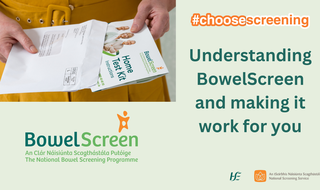
Colorectal cancer is the second most common cause of cancer death in Ireland and presents a serious public health problem. The mortality-to-incidence ratio for this cancer is relatively high, with over five deaths for every 10 incident cases. Early detection has proven results in improved survival rates.
The Minister for Health and Children asked the Board of the National Cancer Screening Service to explore a national colorectal cancer screening programme.
The National Cancer Screening Service established an Expert Advisory Group on Colorectal Screening. The group chaired by Professor Niall O’ Higgins was established to explore the potential benefits of introducing a colorectal cancer screening programme for men and women aged 55 to 74 years. The reports of the Expert Group were validated by an international panel of experts in the field of colorectal cancer screening before submission to the Board of the NCSS. The NCSS has recommended that:
Download a copy of the NCSS Recommendations for a colorectal cancer screening programme in Ireland here.
Prostate Cancer
The Board of the NCSS undertook a review of currently available evidence in relation to the potential effectiveness of introducing a national, population based prostate cancer screening programme. Current evidence is insufficient to recommend a population based screening programme because of concerns that it may not improve survival or quality of life and may ultimately cause more harm than good. The Board will continue to assess new evidence as it becomes available.
Lung Cancer
The Board of the NCSS undertook a thorough review of currently available evidence in relation to the potential benefits of introducing a national, population based lung cancer screening programme. Evidence is insufficient to recommend a population based lung cancer screening programme. Results from international clinical trials currently underway will provide crucial information in the future.
Bladder Cancer
The Board of the NCSS undertook a thorough review of the evidence available regarding the introduction of a population based bladder cancer screening programme. The outcome showed that the potential benefit of screening would at best be small as there is substantial evidence that many of the cancers detected by screening have a low tendency to progress to invasive disease and there is limited evidence to suggest that early treatment of bladder cancer detected through screening improves long-term health outcomes.